By Nicole Gilbro, Photos by Phil
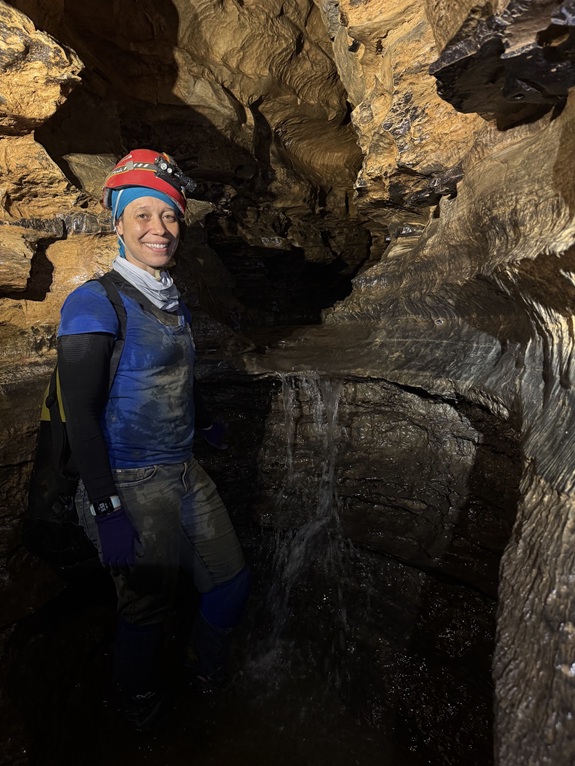
As Hurricane Isaias barreled toward the Gulf, I hadn’t yet had time to figure out how to pronounce the storms name with all the last-minute packing for TAG (Tennessee, Alabama, Georgia) Fall Cave in Mentone, Alabama. Since it was my first time going to TAG and I wasn’t sure what to bring, the list included everything from neoprene to vertical gear (because you never know when you might rappel into a pit with a waterfall). After the recent cave safety talk, I was sure not to forget the travel duct tape for potential broken legs. Phil and I were brimming with optimism as the trajectory of the storm moved a nanometer away from Mentone. Surely, it would miss us entirely!

After getting stuck in traffic in Atlanta, we took the scenic route where, among other things, we witnessed a man by the side of the road doing deadlifts with chunks of broken cinder blocks. When the road finally opened to a view of mountains fading into the hazy distance, the sun set the sky ablaze. Clearly a good omen: “Red sky at night, sailor’s delight.” I was feeling more complacent than ever as we rounded the last switchback into Cloudmont Ski Resort in Mentone in the dark.
We easily found a group of friends and set about reconnoitering the camp site. As soon as I turned on my headlamp, dozens of iridescent pindots glittered in the grass: the tapeta lucida of wolf spiders’ eyes. We followed the twinkling path toward the vendor’s tents where we met up with our Florida Speleological Society friends and arranged a morning tour of Howard’s Waterfall. There was a “squeeze box” vice that cavers were wriggling through in anguished positions to demonstrate progressively tighter squeezes they could fit through. It looked like one of the more creative medieval torture devices.
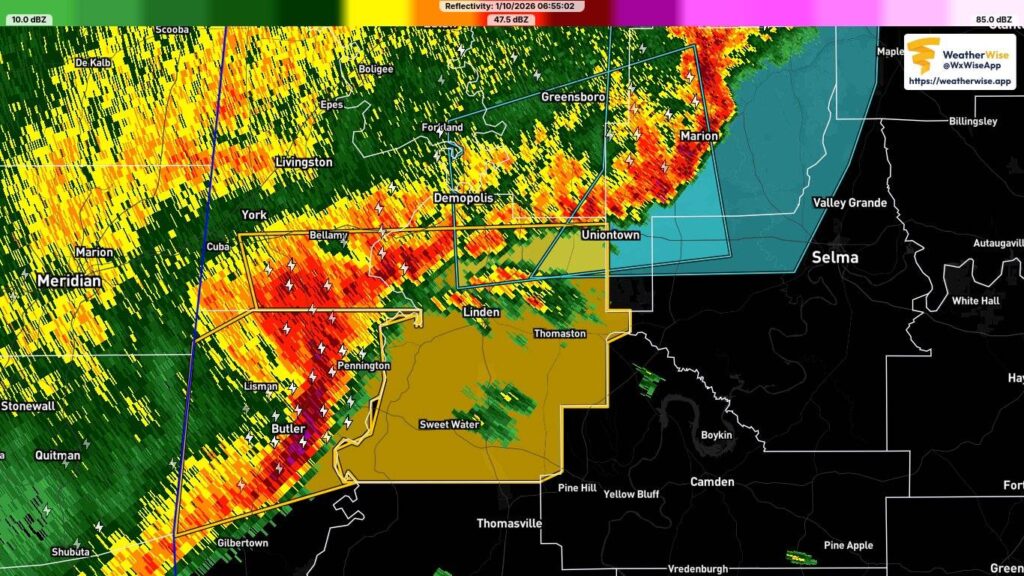
Maggie pulled up a radar image of the hurricane that was far more visually impressive than the line graph: it was about to slam directly into Mentone. My optimism quickly faded. I envisioned porta-potties flying through the air. The wind picked up and scintillas of ash from the bonfire swirled in the drizzle. Perhaps we wouldn’t get to see any caves after the traffic jam from hell. Yet, roasting next to the fire, I imagined the legendary Dogwood City Grotto phoenix forming out of the sparks that rose hundreds of feet into the air.
The next morning, it was still cold and raining but there were no downed trees or howling winds. Our sunset omen kept its promise: a caver’s delight. On the road to our first cave, mist slowly rose from the distant mountaintops. Unfortunately, even with the rain, there was no waterfall at the cave entrance, but it wasn’t flooded either. My mother had already called several times to remind us that caves could sump (taking a break from her usual “divers can get entangled and drown” mantra).
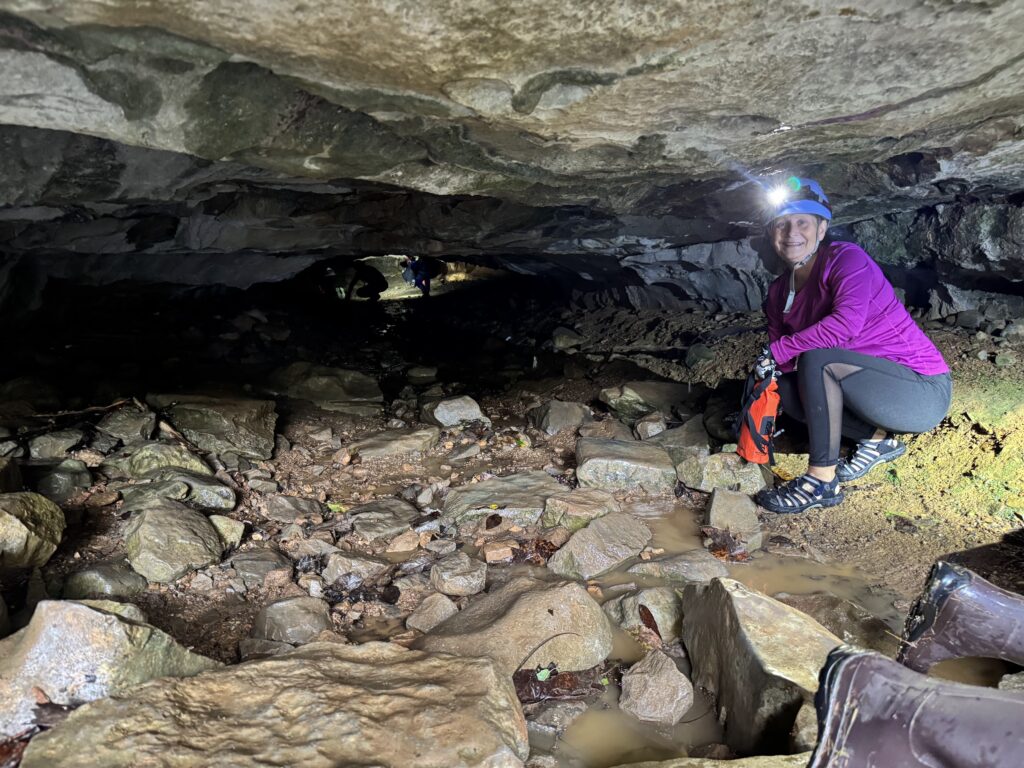
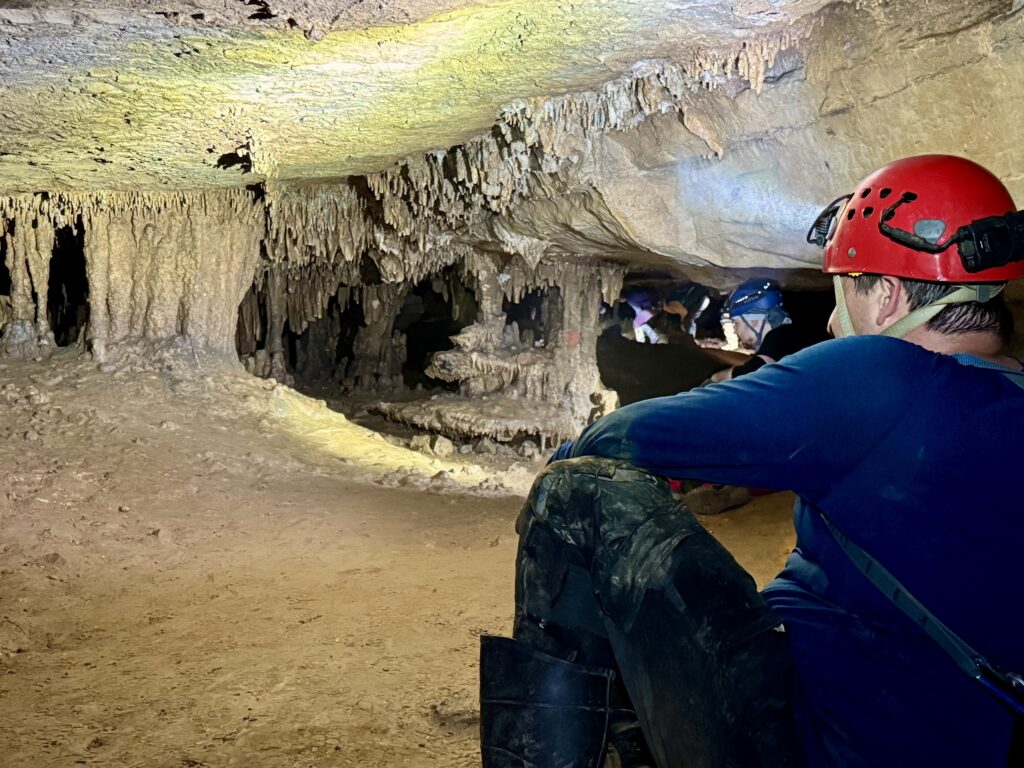
This beginner’s cave was packed with speleothems including stalactites, stalagmites, flowstone and even some helictites. Helictites on the cave ceiling grew in every direction other than down like gnarly goblin fingers. “Helictite” comes from the Greek word helix because of their twisted forms. I got separated from our group but ended up in a large group of experienced cavers, one of whom seemed to know everything there was to know about salamanders.
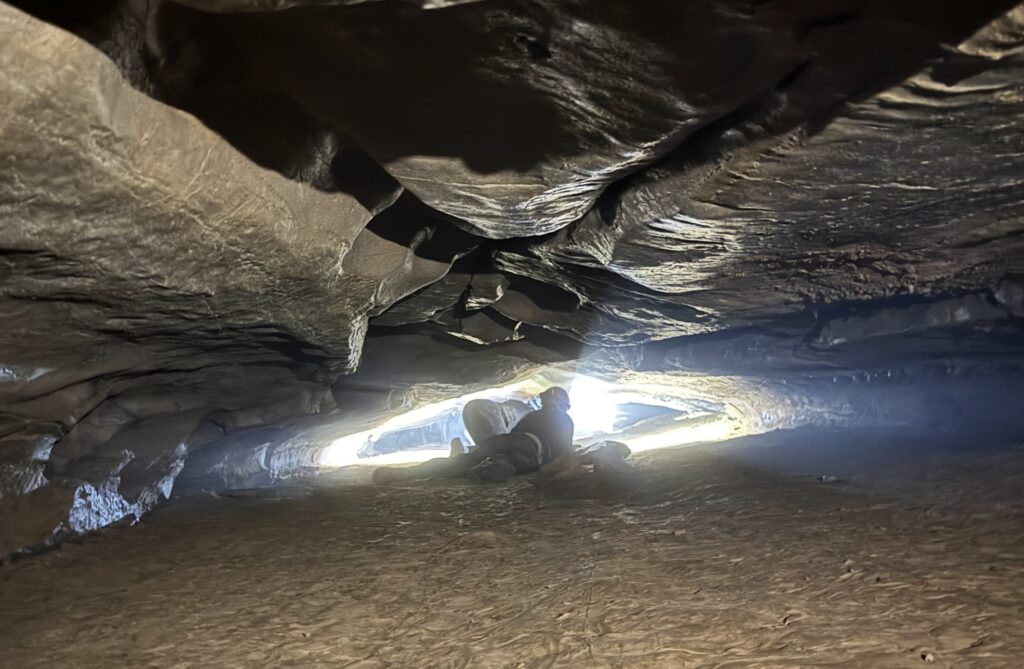
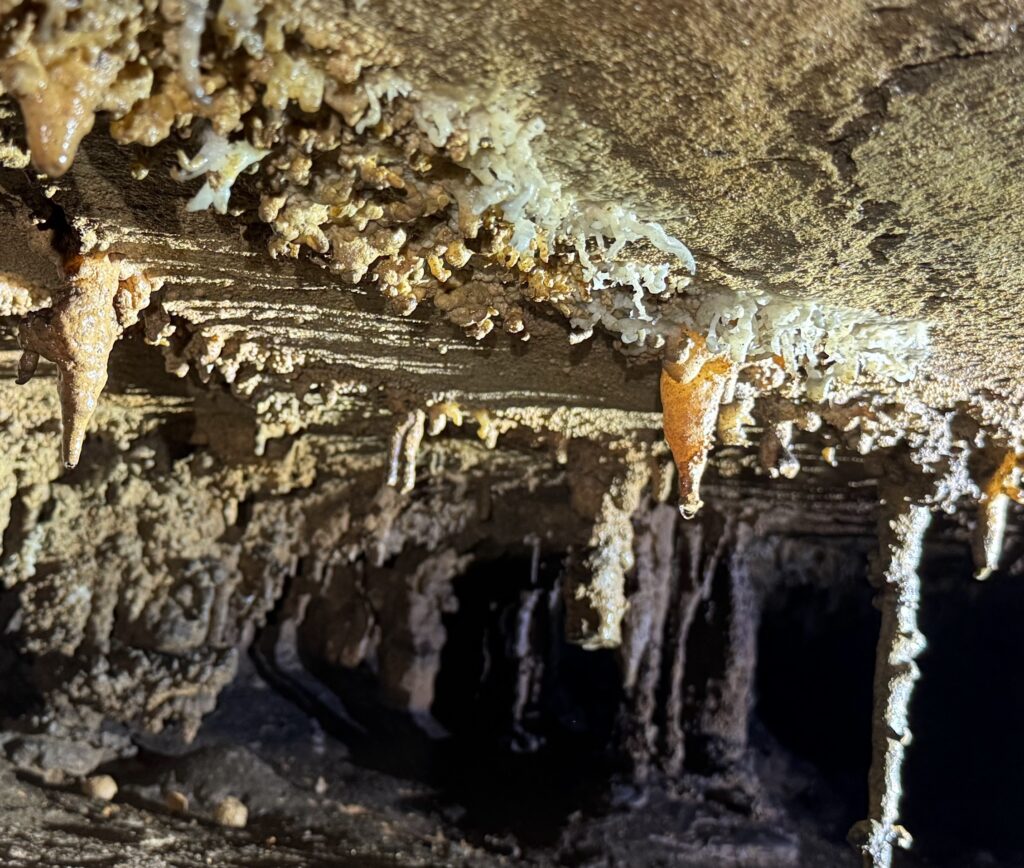
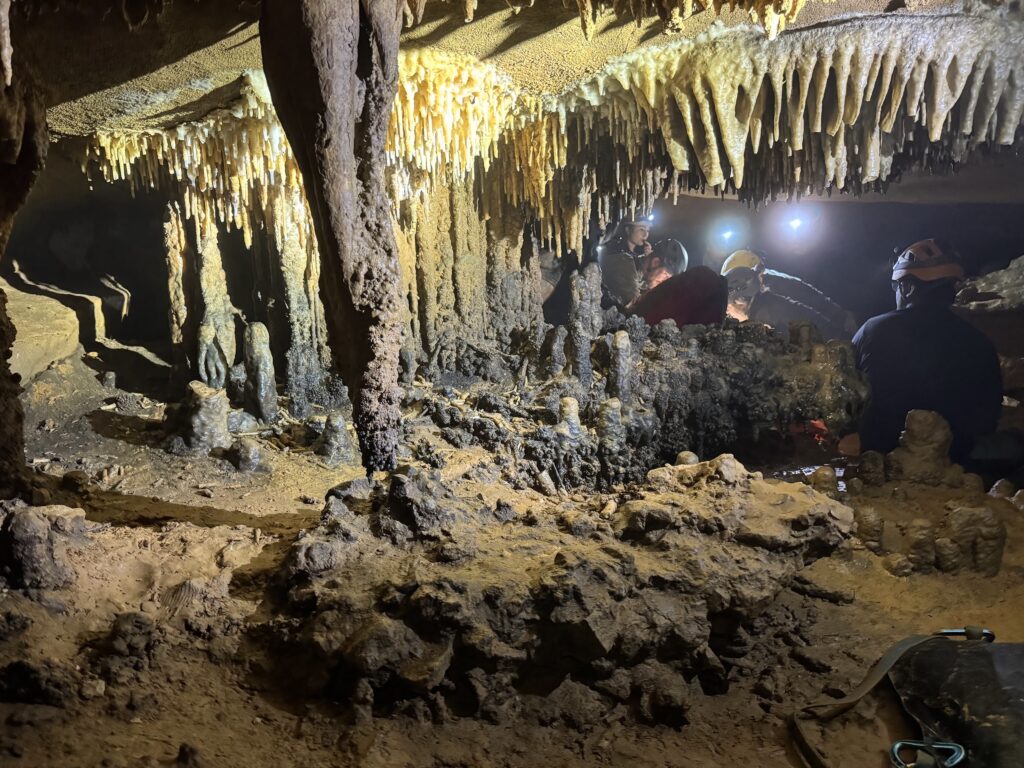
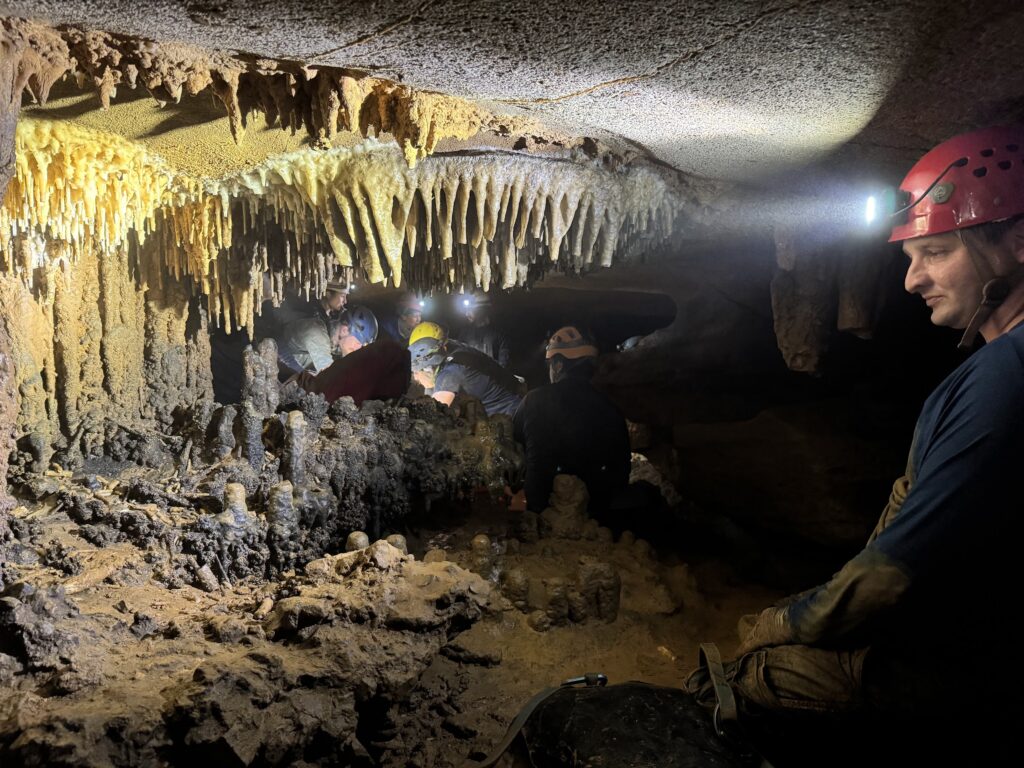
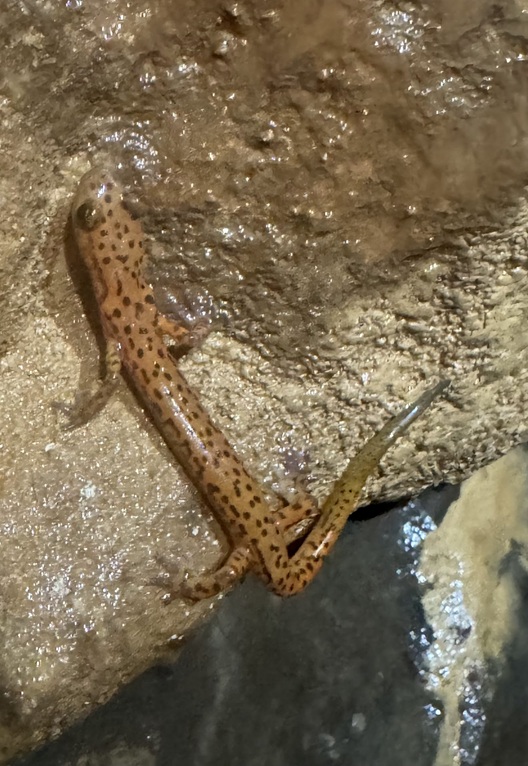
Everyone was amazed that I had never seen a salamander in a cave before. I didn’t have to wait long before finding one in Howard’s Waterfall Cave. Outside an extremely tight squeeze were several black salamanders with silver speckles. The salamander lady, whose name was Danny, explained that the black ones were a species called “slimy” and that the orange salamanders with black spots were known as “cave salamanders.” Not long after ripping my shirt apart squeezing into the salamander hotel, we found a cave salamander as well. Meanwhile, someone in Phil’s group found a piece of amethyst in another section.
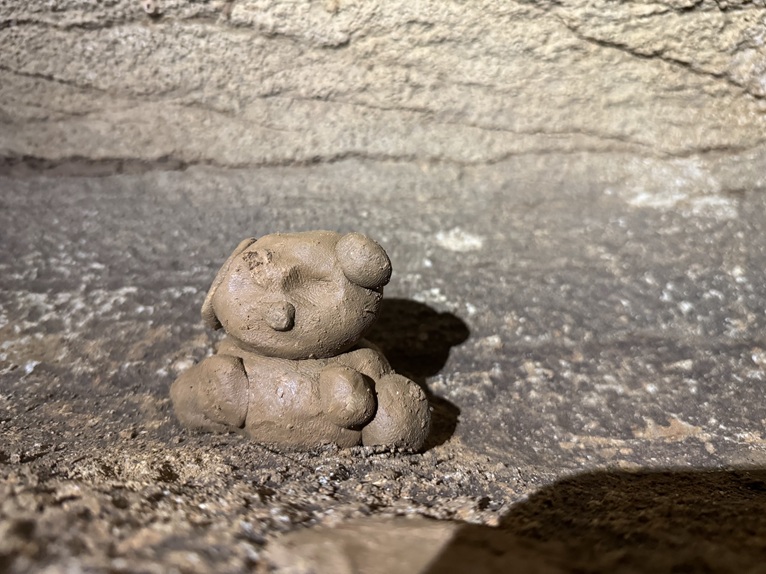
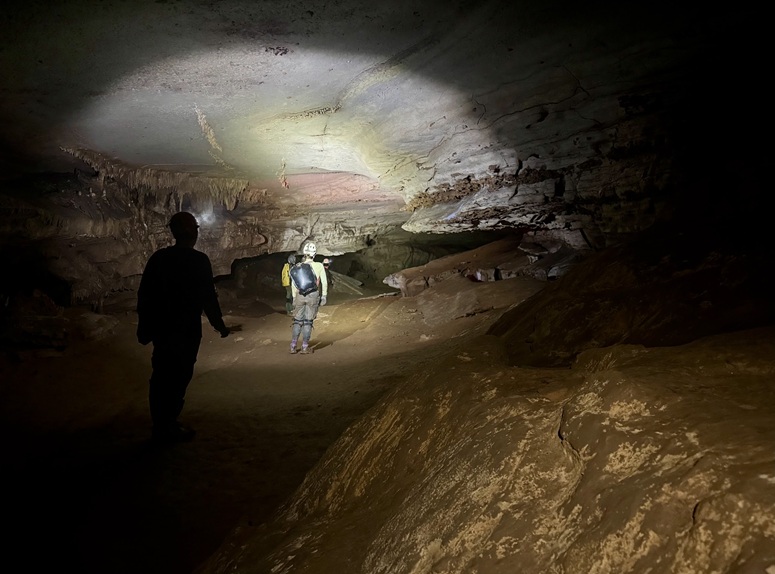
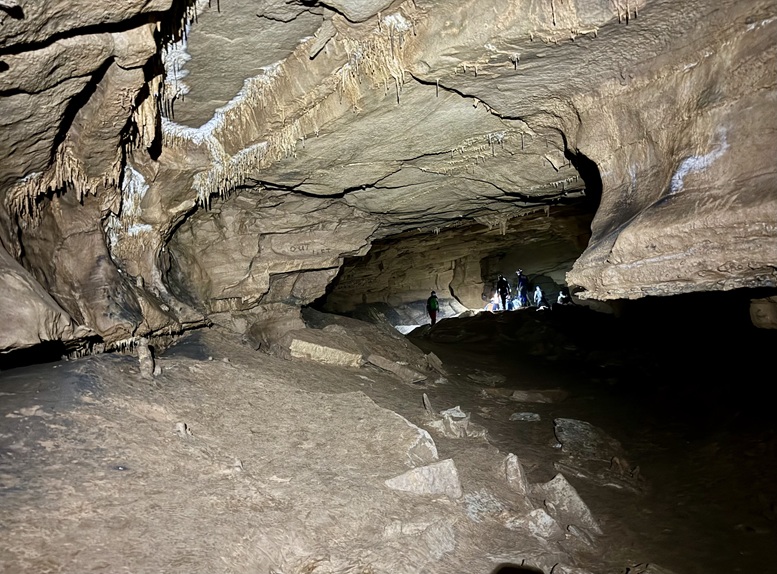
Five hours later, on our way out, we took a short detour to a gated passage of the cave that protects one of its greatest treasures. Removing my headlamp and shining it through the bars, I peered at the handprint paintings on the far wall left behind by the Cherokee. These aren’t the only pictographs in Howard’s Waterfall; the Cherokee also left examples of their syllabary deeper inside, but they weren’t visible from the gate.
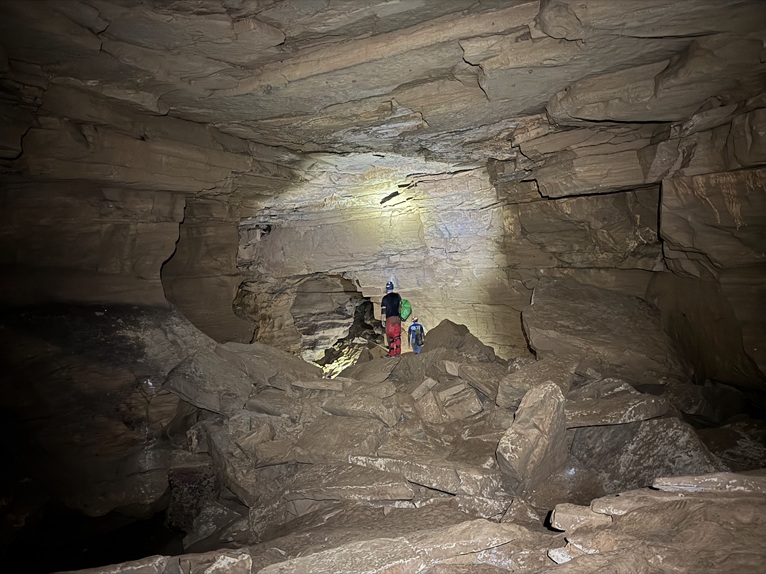
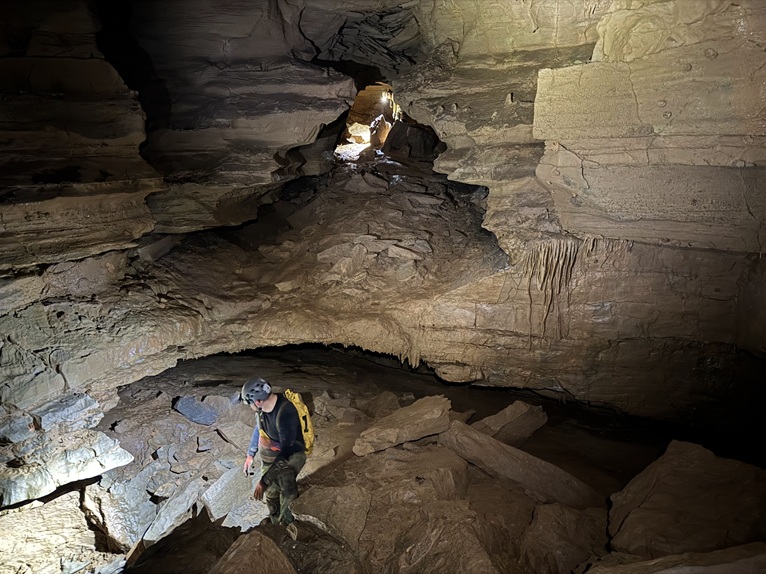
After having some water and brushing the dust off, Phil, Scott Wilder, and I headed over to Hurricane Cave. Thankfully, we were in such a large group in Howard’s Waterfall that I was able to leave my headlamp off for long periods of time. I always pack spare headlamps, but since we live in Florida, my backups are subpar. I never actually have to use them. We hiked to the entrance to Hurricane which was filled with cave crickets and salamanders of three different species: slimy, cave, and spring.
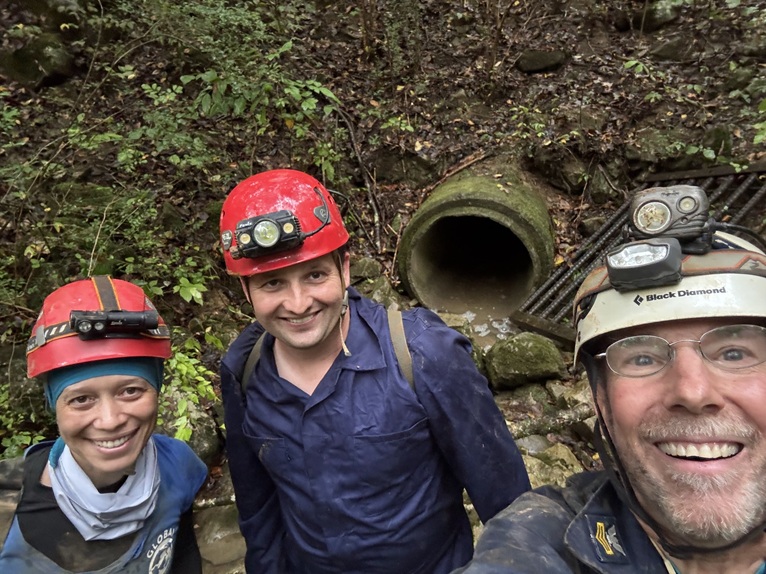
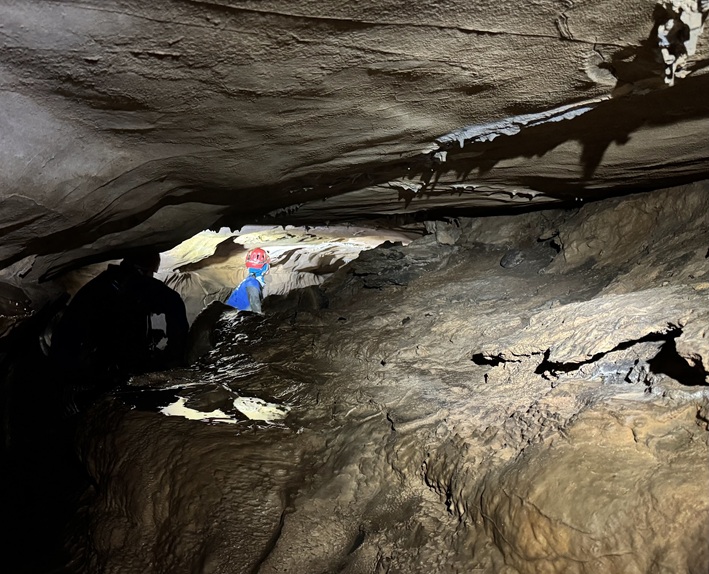
Once inside, we traversed a babbling cave stream, climbed up a waterfall, and walked across a hollowed-out path of black chert surrounded by beautiful, rounded cave pebbles. There was glittering rimstone and tiered flowstone.
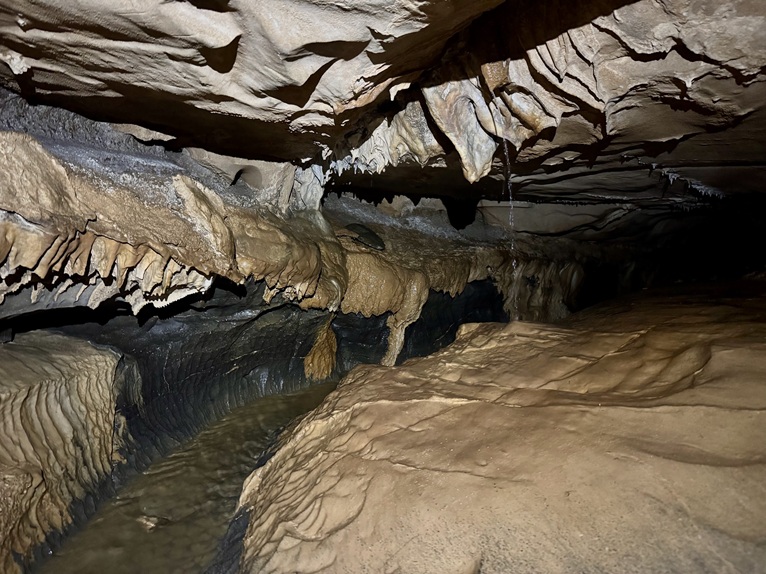
The ceiling above us was dripping with soda straws. Phil shone his light onto some translucent bacon formations.
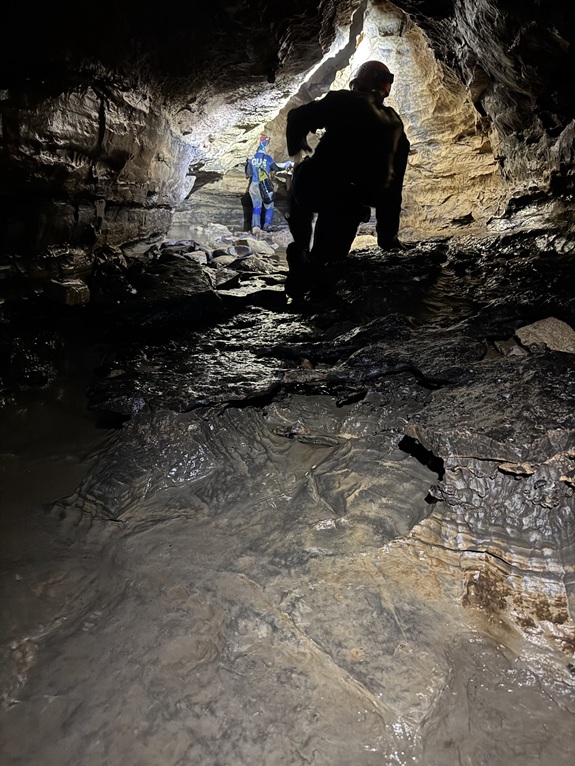
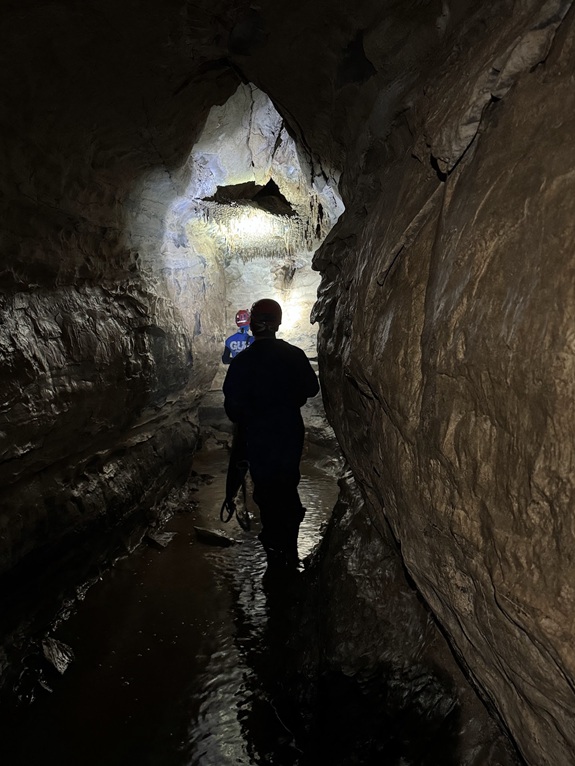
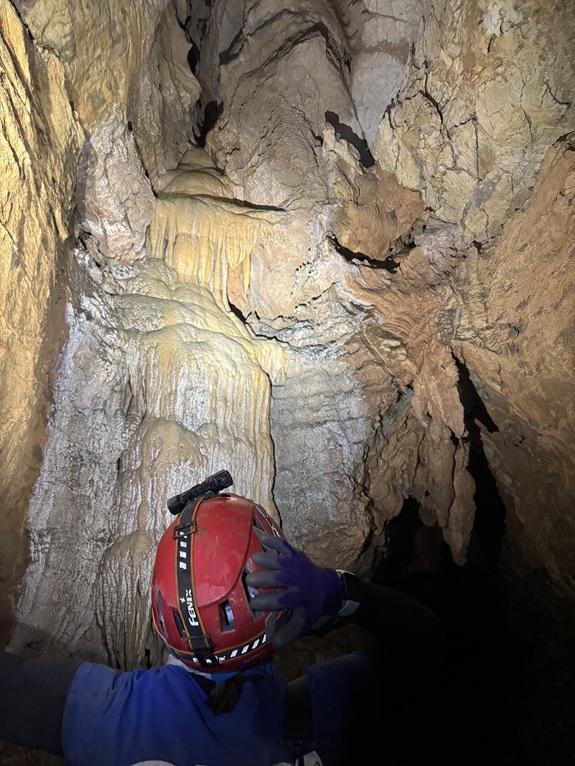
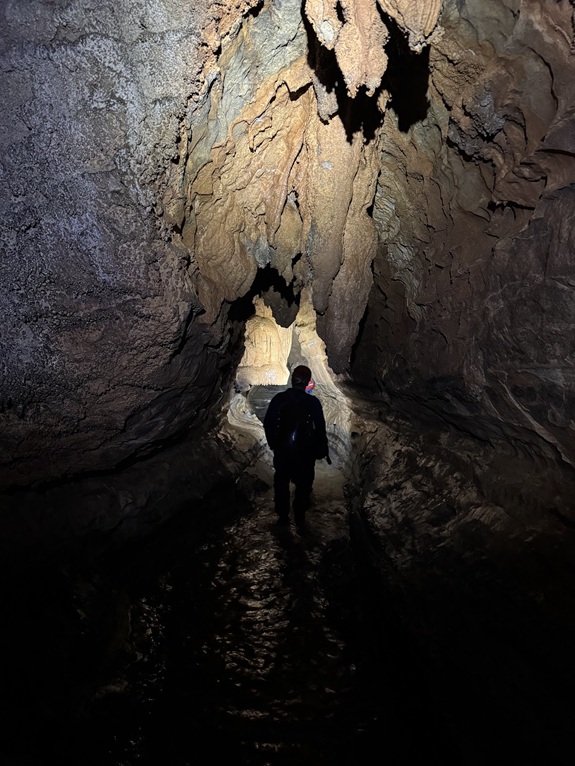
As the sun was setting outside our subterranean wonderland, I contemplated the importance of better backup lights.
All the safety lectures that I had listened to in Florida started to make sense in this seemingly endless labyrinth of TAG caves. Jumping down from a ledge aided by a length of webbing, some crafty ropework, and a tiny foothold, I tried my best not to break a leg. Tired and dreaming of Mexican food, we struggled to find the path in the gloaming. Traipsing over mushroom-studded logs and crackling twigs, we followed the sound of the highway until we arrived back at the concrete underpass leading back to civilization. At the far end of the tunnel, a large bat swooped above our heads, bidding us farewell.
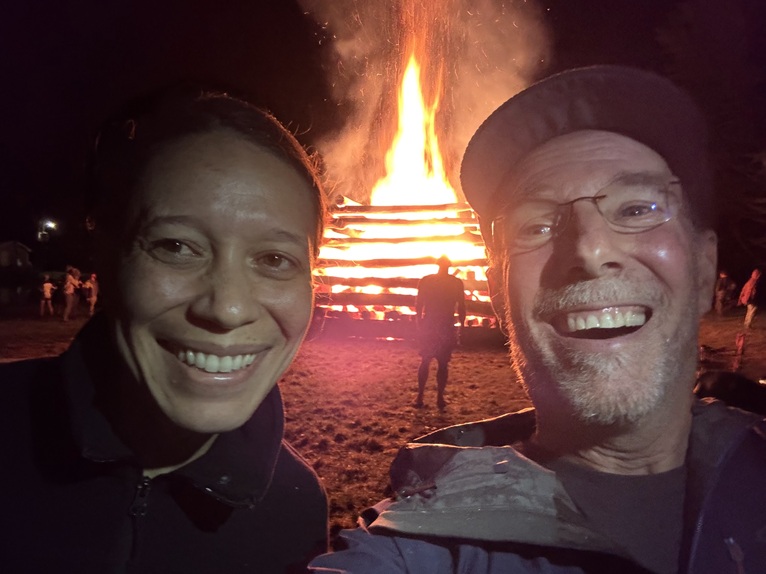
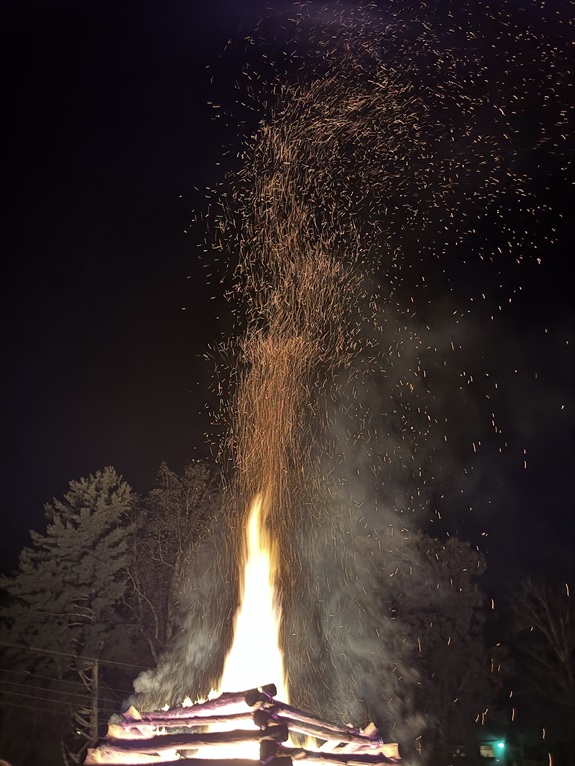
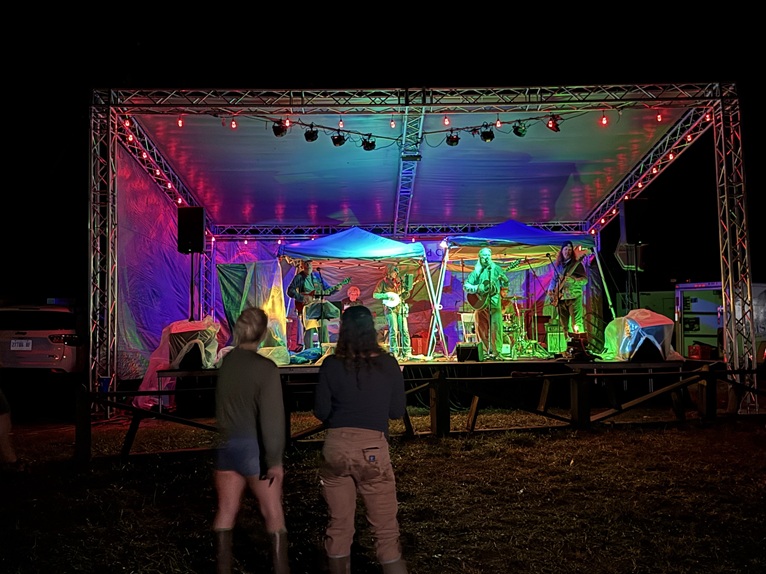
Of course, after the caving and good food there was a party to attend back at camp.
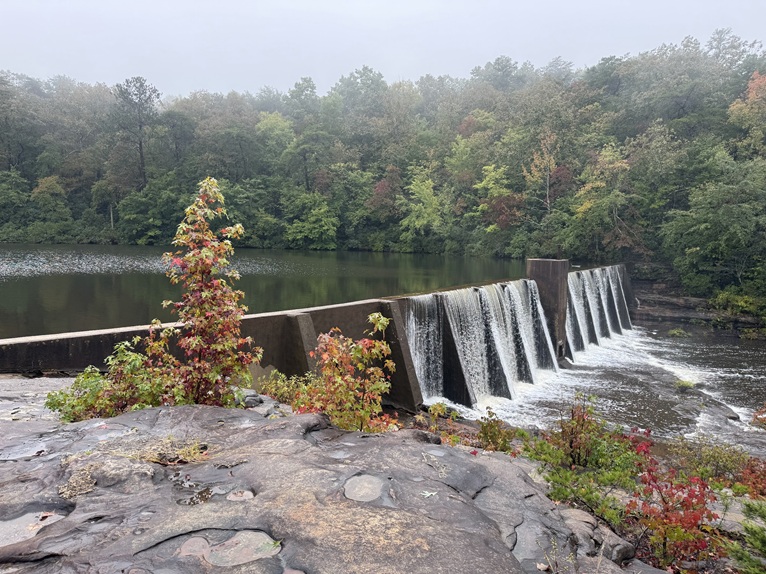
The next morning, we visited DeSoto Falls before heading home. What an amazing weekend!!!!